


Shanghai Travel Guide: Exploring China’s Most Electric City (Through My Lens)

Shanghai is one of those cities that refuses to be just one thing. One minute you’re walking between futuristic skyscrapers that look like they stepped out of a sci-fi movie, and the next you’re sipping coffee in a leafy street that feels more Paris than China.
After spending time exploring everywhere from The Bund to East Nanjing Road to the Former French Concession, I finally understand why travelers say Shanghai feels like stepping into the future, without losing its soul.
Here’s my personal guide to the city, packed with practical tips, underrated spots, and the best things to do if you’re planning your own Shanghai adventure.
Why Shanghai Should Be On Your Travel List

Shanghai is China’s modern heartbeat. It’s a city of over 28 million people and one of the most influential financial centers in the world. It seamlessly blends futuristic skylines with colonial-era architecture, Michelin-star dining with humble street food, and high-speed innovation with deeply rooted traditions shaped by centuries of trade along the Huangpu River.
Originally a small fishing village, Shanghai transformed into a global powerhouse after becoming a major port in the 19th century. Which explains its unique mix of Western and Chinese architectural styles, especially along The Bund and within the French Concession.
Think London’s urban energy, Tokyo’s efficiency, and Dubai’s modern skyline, all in one endlessly photogenic city.
If you love:
✔ big city vibes
✔ food adventures
✔ walkable neighborhoods with stories
✔ nightlife
✔ design & architecture
…then, Shanghai will absolutely steal your heart (and probably make you want to extend your stay).
Top Places to Visit in Shanghai
1. The Bund (Shanghai’s Iconic Skyline)

Standing along The Bund at night feels like watching two eras collide in the most mesmerizing way. This historic waterfront stretches about 1.5 km along the Huangpu River and is lined with 52 colonial buildings dating back to the early 1900s, once home to major British banks and trading houses.
Across the river sits futuristic Pudong, home to some of Asia’s most recognizable skyscrapers.
On one side:
Neo-classical and Art Deco architecture from Shanghai’s “Paris of the East” era
On the other:
The glowing skyline of Lujiazui, including:
Oriental Pearl Tower (468 meters)
Jin Mao Tower (420.5 meters)
Shanghai Tower (632 meters – China’s tallest & world’s 3rd tallest building)
Fun trivia:
At night, the skyline light show syncs beautifully across buildings, creating a coordinated display of colors and patterns visible all along the promenade.
Traveler tips:
Visit twice: once in daylight and once after sunset
Early morning = best light + fewer crowds
Take the ferry across to Pudong (only ~2 RMB), Shanghai’s most underrated experience
2. East Nanjing Road (The Times Square of Shanghai)
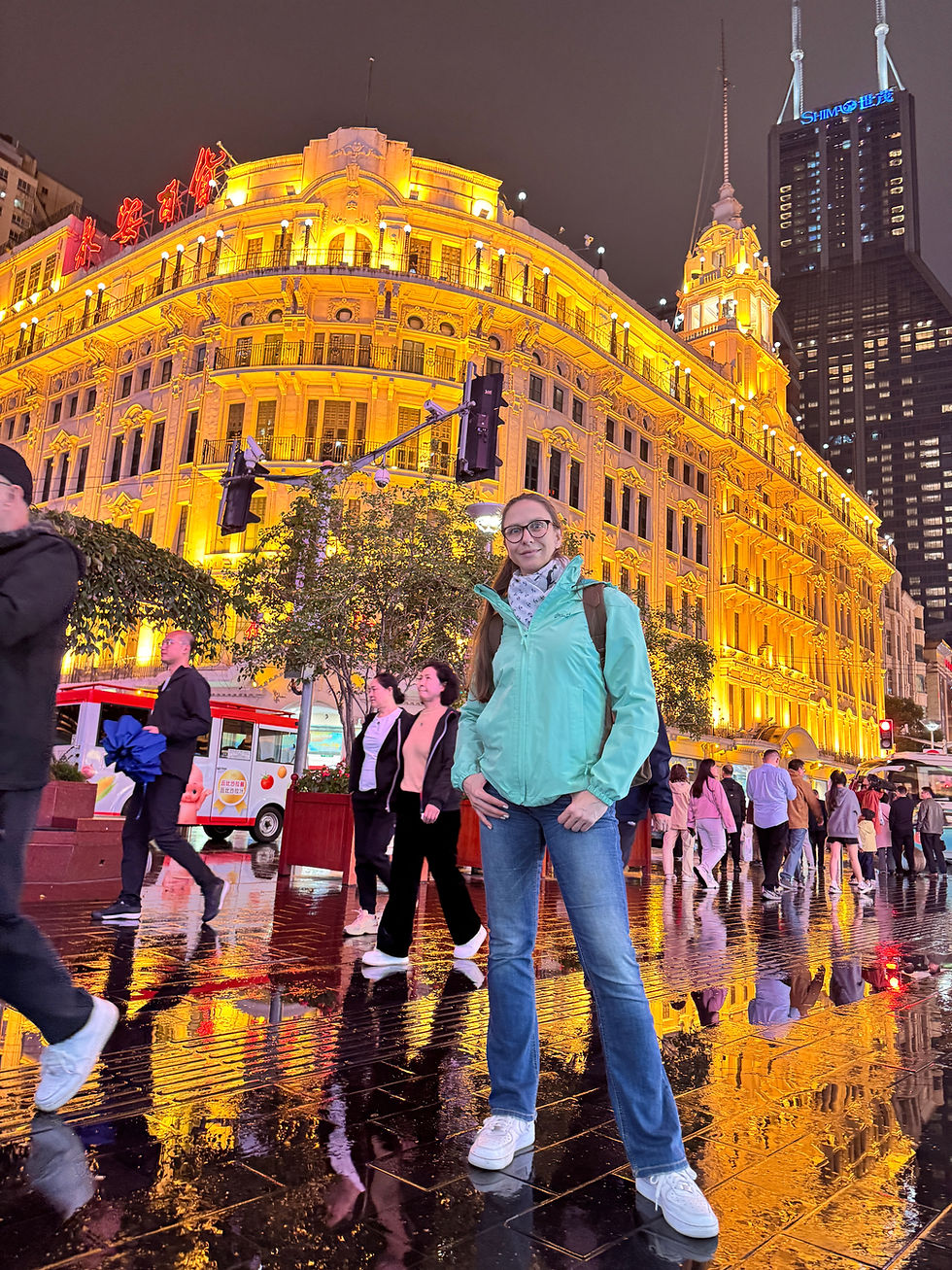
East Nanjing Road is part of Nanjing Road, one of the busiest shopping streets in the world. The full stretch of Nanjing Road runs about 5.5 km and can attract up to a million visitors per day in peak seasons. It’s the commercial soul of Shanghai: buzzing, electric, and unapologetically alive.
This street has been a shopping hub since the 1800s and today mixes modern megamalls with classic Chinese department stores.
What I loved:
The surreal “sky bridge moment” when the Oriental Pearl Tower peeks between skyscrapers
The blend of luxury brands and classic Shanghai snack stalls
How incredibly clean and organized it still feels despite the crowds
Trivia:
Nanjing Road was one of the first streets in China to be fully lit by electric lamps.
Traveler tips:
Wear comfy shoes, it’s longer than it looks
Visit after dark for neon magic
Explore side alleys for hidden bakeries and affordable eats
3. Former French Concession (The Most Beautiful Walks in Shanghai)

Once governed by the French from 1849 to 1943, this area still holds a distinctly European charm. Wide boulevards lined with French plane trees, century-old villas, and Art Deco buildings create a dreamy contrast to Shanghai’s ultra-modern identity.
The Former French Concession is where Shanghai slows down, where cafés feel cinematic, and every corner feels Pinterest-worthy.
Don’t miss:
Wukang Road: home to the iconic Wukang Mansion (1924)
Tianzifang: a maze of art studios and boutique cafés
Sinan Mansions: restored heritage villas turned into elegant dining spaces
Huaihai Road: luxury shopping meets historic charm
Trivia:
Many famous Chinese writers, intellectuals, and movie stars once lived in this district.
Traveler tip:
This is the best area to slow down, stroll, and just feel the city. Plan at least half a day here (ideally more).
4. Yu Garden & Yuyuan Bazaar (For Classic Shanghai Vibes)

Built during the Ming Dynasty in 1559, Yu Garden was designed as a peaceful retreat for government official Pan Yunduan’s parents. It’s filled with symbolic designs like zigzag bridges believed to ward off evil spirits, koi-filled ponds, and intricate rock formations.
Right outside, Yuyuan Bazaar brings chaos, color, and irresistible energy.
Trivia:
Yu Garden was partly destroyed during the Opium Wars and restored in the 1950s.
Must-try:
Xiao Long Bao from Nanxiang. Expect lines, but it’s iconic for a reason.
5. Shanghai Tower Observation Deck (Touch the Sky)

Standing at 632 meters, Shanghai Tower is not just gigantic, it’s an engineering masterpiece. The tallest building in China (and currently the world’s third-tallest by architectural height), it features a dramatic twisted design that helps reduce wind loads by around 24 %.
For a time it held the record for the world’s fastest elevators (reaching speeds of up to 20.5 m/s) until it was surpassed by the Guangzhou CTF Finance Center. Its observation deck on the 118th (and 119th) floors offers sweeping 360° views of the city.
Best time to go:
Arrive just before sunset to witness Shanghai shift from golden glow to neon wonderland.
6. Jing’an Temple (Peace in the Middle of the City)

Jing’an Temple is one of Shanghai’s oldest Buddhist temples, with over 1,700 years of history. Originally built in 247 AD near Suzhou Creek during the Three Kingdoms period, it was later relocated to its current site on West Nanjing Road in 1216 during the Southern Song Dynasty.
The golden roof and incense-filled atmosphere create a calm contrast to the city outside.
Traveler tip:
Light incense for blessings. It's a beautiful way to participate in local culture.
7. Suzhou Creek (For Riverside Walks & Hidden Cafés)

Once industrial and overlooked, Suzhou Creek has undergone a major transformation. Now it’s lined with art spaces, renovated warehouses, trendy coffee spots, and cycling paths.
Trivia:
This river once played a key role in Shanghai’s industrial rise during the early 20th century.
Great for:
Morning runs, golden-hour walks, photography, and quiet exploration.
Best Foods to Try in Shanghai

Shanghai cuisine is slightly sweet, deeply savory, and incredibly comforting.
⭐ Xiao Long Bao
Steam-filled soup dumplings with delicate skins.
⭐ Sheng Jian Bao
Pan-fried buns with crispy bottoms and juicy filling.
⭐ Scallion Oil Noodles
Simple, fragrant, and shockingly addictive.
⭐ Black Sesame Ice Cream
Nutty, rich, and uniquely Chinese.
⭐ Hotpot
Perfect for chilly nights or group dining.
Food trivia:
Shanghai-style dishes often feature sugar, giving them their distinctive bittersweet flavor profile.
Traveler tip:
Most restaurants are cashless, so Alipay or WeChat Pay is essential.
Is Shanghai Safe for Solo Travelers?

Yes, Extremely Safe!
Shanghai consistently ranks among Asia’s safest large cities thanks to strong public security systems and very low rates of violent crime. Streets are well-lit, heavily monitored, and people stay out late without fear.
My Experience as a Woman
I felt safe walking alone at night around the French Concession, Nanjing Road, and The Bund. Even late evenings felt comfortable. Shanghai is one of the easiest Asian megacities to navigate solo, but as always, practice standard awareness.
Getting Around Shanghai

Shanghai’s public transportation is fast, clean, and incredibly efficient, easily one of the best in Asia. Getting around is part of the experience. Each transport option gives you a different view of daily Shanghai life.
🚇 Metro
Cheap (~3–7 RMB), reliable, modern, and air-conditioned. It covers almost every major attraction and is the easiest way to navigate the city.
Must-download:
Get the Metro DaDuHui app for real-time metro routes, station maps, travel times, and QR code ticketing. It’s incredibly helpful for first-time visitors.
Travel tip: Avoid 5–7 PM if you can. Rush hour means packed trains.
🚌 Buses
Shanghai’s bus network is extensive and budget-friendly, offering scenic rides through neighborhoods you might miss underground.
Best for:
Short local trips
Sightseeing
Exploring smaller districts
Things to note:
Signage may be mostly in Chinese
Can be slower during traffic
Great option if you want to experience local commuting life
🚕 Taxis & Didi
Very affordable compared to most major cities. Drivers rarely speak English, so show the address in Chinese characters, not English.
Bonus tip: Use Didi with “English Mode” turned on for easier communication.
🚲 Shared Bikes
Shanghai is one of the most bike-friendly megacities in Asia, and shared bikes are everywhere. You’ll see bright-colored bikes from apps like:
Alipay’s built-in bike rentals
Just scan a QR code via Alipay or WeChat, hop on, and go. It’s perfect for short distances, riverside rides, or French Concession explorations.
Bike tip: Always park in designated bike zones to avoid small fines or app restrictions.
🚶 Walking
Some neighborhoods (especially the Former French Concession, Xintiandi, and Jing’an) are best explored on foot.
You’ll find hidden cafés, boutique shops, and charming side streets you’d miss in a car.
📱 Translation Apps & Devices
A translation tool can be life-changing in Shanghai, especially in smaller shops, taxis, or local restaurants.
What works best:
Google Translate (works offline if you download the Chinese language pack)
Pleco (amazing for reading menus or signs)
Pocket AI translators like Youdao or Timekettle (locals actually use these too)
WeChat’s built-in photo translate feature (super accurate for menus)
Travel tip: Screenshots + photo translation = your best friend at restaurants.
🌐 VPN
If you need access to Instagram, WhatsApp, Google Maps, Gmail, Threads, TikTok, or other Western apps, download a VPN before you arrive.
Once inside China, many VPN websites and app stores may be inaccessible, making it harder to set one up after landing.
Best Time to Visit Shanghai

Shanghai has four distinct seasons, and each one gives the city a different personality (from cherry blossoms to neon-lit winter nights). Here’s what to expect during each period:
🌸 March–May (Spring): Best for Perfect Weather
Spring is one of the most stunning times to visit. Temperatures hover between 15–25°C, flowers bloom across parks, and the city feels lively but not overwhelmingly hot.
What to expect:
Cherry blossoms at Gucun Park and Century Park
Comfortable sightseeing weather
Light jackets + lots of walking weather
It’s one of the most photogenic seasons, perfect if you love street photography or café hopping.
🍁 September–November (Autumn): Best Overall Season
Autumn is widely considered the best time to visit Shanghai. The heat fades, the skies are clear, and the whole city feels fresh and vibrant.
Why travelers love it:
Temperatures between 18–26°C
Autumn colors in parks and the French Concession
Ideal conditions for rooftop bars, night walks, and outdoor dining
This is my personal favorite, the city is effortlessly gorgeous.
❄️ December–February (Winter): Cold, Moody, Atmospheric
Shanghai winters are cold (0–10°C), but rarely freezing. There’s a cozy, moody charm to the city: warm lights, steaming hotpot restaurants, and quiet mornings.
Expect:
Crisp air, especially at The Bund
Great indoor activities: museums, malls, tea houses
Lower hotel rates
The best time for travelers who enjoy slow travel and fewer crowds.
☀️ June–August (Summer): Hot, Humid, and Busy
Summer in Shanghai is humid, with highs around 30–38°C. If you don’t mind heat, it’s still enjoyable, especially the evenings.
Pros:
Long days, excellent for night photography
Lively nightlife
Plenty of indoor escapes (cafés, malls, restaurants)
Cons:
Humidity is real
Afternoon showers are common
Avoid:
Golden Week (October 1–7): it’s the busiest travel week in China, and every attraction will be packed.
Practical Tips for First-Time Visitors

A few smart preparations can make your Shanghai trip feel effortless. Here are the things I wish I knew before visiting:
💳 Payments (Prepare for a Cashless City)
Shanghai runs almost entirely on digital payments. Foreign cards now work smoothly with:
Alipay (Tour Pass)
WeChat Pay (linked to Visa/Mastercard)
Tip: Carry a small amount of cash for rare exceptions, but you’ll mostly tap your phone.
📱 SIM Card / eSIM (Get Connected Instantly)
Having data is essential for translation, maps, and navigation.
The easiest options:
Airalo eSIM (install before flying)
Airport counters at PVG/Hongqiao
China Mobile or China Unicom shops
Tip: If you’re using a VPN, install it before activating your eSIM.
🗣️ Language (English Is Limited)
Most young locals understand basic English, but many taxi drivers, shop staff, and street vendors do not.
What helps:
Google Translate (download offline Chinese)
WeChat’s photo-translate feature (amazing for menus)
A screenshot folder of essential phrases in Chinese
Locals are friendly and often try their best to help even with language barriers.
🔐 Safety (Incredibly Safe, Even at Night)
Shanghai is one of Asia’s safest big cities. You’ll see people walking alone at midnight without worry.
Just keep in mind:
Crowds on Nanjing Road = be mindful of your bag
Scams are rare but ignore random “tea ceremony invitations” from strangers
Overall: extremely safe for solo female travelers.
🌡️ Weather (Layers Are Your Best Friend)
Even in warm seasons, indoor AC can be cold.
Don’t forget to bring:
A light scarf or thin jacket
Comfortable shoes (you’ll walk a lot!)
A small umbrella (surprise rain is common)
🍜 Food Allergies (Prepare Translations)
Menus can vary in accuracy. If you have serious allergies, prepare a translation card in Chinese.
Example:
“I am allergic to peanuts. Please do not include peanuts, peanut oil, or peanut sauce.”
Restaurants are usually accommodating.
How Many Days Do You Need in Shanghai?

Most travelers spend 3–5 days, but the city can easily keep you busy for a week. Here’s how to plan based on your travel style:
3 Days: Perfect for First-Time Travelers
The highlights, iconic views, and must-see neighborhoods.
5 Days: For Slow Travelers & Neighborhood Lovers
More time to wander, discover cafés, and explore beyond the main attractions.
7 Days: For Deep-Dive Explorers
Add day trips + immersive cultural experiences.
Sample Shanghai Itinerary
Day 1: The Bund, Nanjing Road & People’s Square
Start at The Bund for the skyline, walk Nanjing Road, explore malls and museums around People’s Square.
Perfect for: first impressions + neon vibes.
Day 2: French Concession, Xintiandi & Tianzifang
Slow, artsy, and stylish. These areas are full of coffee shops, boutiques, and tree-lined streets.
Perfect for: photography + café hopping.
Day 3: Yu Garden, Old City & Shanghai Tower
A mix of tradition and modernity. End your night with the best skyline view in the city.
Perfect for: culture + iconic landmarks.
Optional Day 4: Suzhou Creek & Jing’an Temple
More local, more artsy, super photogenic.
Perfect for: minimal crowds + relaxed wandering.
Optional Day 5: Day Trip
Choose one:
Suzhou (classical gardens + canals)
Hangzhou (West Lake + tea plantations)
Zhujiajiao (ancient water town)
Quick Reference: Essential Info

Pin this guide for your Shanghai adventure! And if you found this helpful, check out my other China travel guides.
Currency: Chinese Yuan (CNY/RMB)
Language: Mandarin Chinese (Shanghai dialect also spoken)
Best time to visit: March-May, September-November
Average daily budget:
Budget: ¥200-400 ($30-60 USD)
Mid-range: ¥500-1000 ($70-150 USD)
Luxury: ¥1000+ ($150+ USD)
Must-download apps:
VPN (before arriving!)
Google Translate (offline mode)
Maps.me (offline maps)
Alipay or WeChat Pay
Emergency numbers:
Police: 110
Ambulance: 120
Fire: 119
Useful Chinese phrases:
你好 (Nǐ hǎo) - Hello
谢谢 (Xièxiè) - Thank you
多少钱? (Duōshao qián?) - How much?
这个 (Zhège) - This one
不要辣 (Bùyào là) - No spicy
买单 (Mǎidān) - Check please
Remember: Travel responsibly, respect local customs, and don't forget to look up from your phone every once in a while. Shanghai's beauty is best experienced in person.
Why Shanghai Stays With You Long After You Leave

Shanghai is one of those cities that looks incredible in photos but hits completely different in person. The energy, the contrast between old and new, the food scene, it's all next level.
What I love most about Shanghai is that it doesn't try to be just one thing. It's chaotic and calm, traditional and futuristic, historical and cutting-edge, all at once. You can have xiaolongbao for breakfast in a hole-in-the-wall restaurant, spend the afternoon in a 1930s art deco building, and end your night at a rooftop bar overlooking one of the most futuristic skylines in the world.
My advice? Don't over-plan. Yes, hit the major spots, but leave room to wander. Some of my best Shanghai memories are from getting lost in the French Concession, stumbling into random cafés, and just watching the city flow around me.
Whether you're here for three days or three weeks, Shanghai will leave an impression. Just remember: comfortable shoes, an open mind, and an empty stomach are your three best travel companions in this city.
Have you been to Shanghai? What were your favorite spots? Drop them in the comments, I'm always looking for new places to explore!


Comments